
 https://sammechanical.com/wp-content/uploads/2024/12/Worker-installing-a-new-filter-in-hvac-system.jpg
1250
2000
AbstraktMarketing
/wp-content/uploads/2024/01/sam-logo-crete-300x154.png
AbstraktMarketing2024-12-10 14:35:122025-01-07 15:57:30The Role of HVAC on Indoor Air Quality
https://sammechanical.com/wp-content/uploads/2024/12/Worker-installing-a-new-filter-in-hvac-system.jpg
1250
2000
AbstraktMarketing
/wp-content/uploads/2024/01/sam-logo-crete-300x154.png
AbstraktMarketing2024-12-10 14:35:122025-01-07 15:57:30The Role of HVAC on Indoor Air QualityThis guide helps facility leaders understand hospital air quality standards, the risks of falling short, and how partners like SAM Mechanical Services support long-term compliance and performance.
Why Air Quality Requirements Matter in Healthcare Environments
Hospitals operate under far stricter indoor air quality expectations than most commercial facilities. Because patients often have compromised immune systems, even minor air quality issues can escalate into serious health risks. Meeting hospital air quality standards helps control airborne pathogens, regulate humidity, and ensure proper pressure relationships between spaces such as operating rooms, isolation rooms, and patient wards.
Effective air quality management also supports staff productivity and safety. Clean, properly ventilated air reduces fatigue, respiratory irritation, and long-term exposure risks for healthcare workers who spend long hours indoors. For facility managers, maintaining compliance is both a moral responsibility and an operational necessity that impacts accreditation, inspections, and liability.
Understanding ASHRAE 170 and Other Healthcare Compliance Standards
ASHRAE 170 is the primary standard governing ventilation and indoor air quality in healthcare facilities. It outlines minimum requirements for airflow rates, filtration levels, temperature, humidity control, and pressure relationships between rooms. These hospital ventilation standards are designed to reduce infection risk while ensuring occupant comfort and safety.
In addition to ASHRAE 170, hospitals must align with guidelines from organizations such as the CDC, The Joint Commission, and local health authorities. Compliance requires more than installing the right equipment. It demands ongoing monitoring, documentation, and maintenance of healthcare HVAC systems. SAM Mechanical Services works with facility teams to ensure systems remain compliant not just at installation, but throughout their lifecycle.
Identifying the Risks of Poor Hospital Indoor Air Quality
Failing to meet hospital air quality standards introduces a range of clinical, legal, and operational risks. Understanding these consequences reinforces the importance of proactive air quality management.
Increased Infection Risk
Poor ventilation and filtration allow airborne contaminants to circulate throughout patient care areas. This increases the likelihood of healthcare-associated infections, especially in surgical suites, isolation rooms, and intensive care units. Even short-term IAQ lapses can have serious patient outcomes.
Legal and Liability Exposure
Hospitals that fail to maintain proper air quality may face lawsuits, regulatory penalties, or insurance complications. If IAQ issues are linked to patient harm or staff illness, liability exposure increases significantly. Documentation gaps and poor maintenance records further amplify this risk.
Non-Compliance and Accreditation Issues
Non-compliance with hospital ventilation standards can jeopardize accreditation status and trigger corrective action plans. Failed inspections often result in costly remediation efforts, operational disruptions, and reputational damage that extends beyond the facilities department.
Staff Health and Retention Challenges
Poor indoor air quality affects healthcare workers just as much as patients. Chronic exposure to contaminants or improper humidity levels can contribute to respiratory issues, fatigue, and burnout. These are all factors that impact retention in an already strained workforce.
Equipment and Infrastructure Degradation
Excess humidity, dust, or improper airflow can damage sensitive medical equipment and building systems. Over time, this accelerates wear on HVAC components and increases maintenance costs, further straining facility budgets.
Hospitals can strengthen air quality compliance and patient safety by exploring SAM Mechanical Services’ professional ventilation solutions designed to meet strict hospital air quality standards.
Tips for Improving Hospital Air Quality Standards
Maintaining high IAQ performance requires a proactive, system-wide approach. Facility leaders can take several strategic steps to strengthen compliance and reliability.
Conduct Routine IAQ Assessments
Regular air quality testing helps identify particulate levels, airflow imbalances, and pressure issues before they escalate. These assessments provide actionable data to support targeted improvements and ongoing compliance with hospital air quality standards.
Upgrade Filtration Systems
Hospitals should utilize a high-performance commercial air filtration system, including HEPA filtration where required. Upgrading filters improves particle capture, supports infection control, and enhances overall air cleanliness across critical care areas.
Maintain Proper Pressure Relationships
Positive and negative pressure environments must function exactly as designed. Routine testing ensures isolation rooms, operating rooms, and sterile spaces maintain correct airflow direction to prevent cross-contamination.
Control Temperature and Humidity
Maintaining precise temperature and humidity ranges limits pathogen survival and improves patient comfort. Advanced controls integrated into modern healthcare HVAC systems allow for consistent environmental regulation across departments.
Implement Preventive Maintenance Programs
Scheduled maintenance ensures fans, dampers, filters, and controls operate as intended. Partnering with experienced providers like SAM Mechanical Services helps facilities avoid performance drift that leads to non-compliance.
The Role of HVAC, Ventilation, and Filtration in Hospital IAQ
Hospital air quality depends on the seamless integration of three core systems. Each plays a distinct yet interconnected role in meeting hospital air quality standards.
HVAC Systems
Healthcare HVAC systems regulate IAQ via temperature, humidity, and airflow throughout the facility. Properly designed and maintained HVAC infrastructure ensures consistent environmental control while supporting infection prevention strategies. Without regular calibration and servicing, even advanced systems can fall out of compliance.
Ventilation Systems
Ventilation manages how fresh air enters and stale air exits the building. Adhering to hospital ventilation standards ensures adequate air changes per hour and proper airflow direction. Effective ventilation dilutes contaminants and reduces airborne pathogen concentration in occupied spaces.
Air Filtration Systems
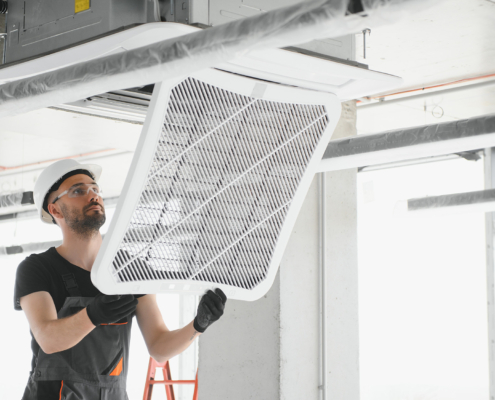
A robust commercial air filtration system captures airborne particles before they circulate. Multi-stage filtration removes dust, allergens, bacteria, and viruses, protecting both patients and staff. Air filtration performance must be routinely verified to maintain effectiveness.
Together, these systems form the foundation of safe, compliant hospital environments. SAM Mechanical Services specializes in optimizing each component to work together seamlessly.
Partner With SAM Mechanical Services for Hospital IAQ Excellence
Maintaining hospital air quality standards is an ongoing responsibility that demands expertise, vigilance, and reliable systems. From regulatory compliance to patient safety, the stakes are too high for reactive or piecemeal solutions.
SAM Mechanical Services supports healthcare facilities with comprehensive HVAC, ventilation, and filtration expertise tailored to clinical environments. By partnering with SAM, facility leaders gain a trusted ally in protecting patients, supporting staff, and ensuring long-term compliance with evolving healthcare air quality expectations.
Proactive investment in IAQ isn’t just best practice, it’s essential for modern healthcare operations.
https://sammechanical.com/wp-content/uploads/2024/12/Worker-installing-a-new-filter-in-hvac-system.jpg
1250
2000
AbstraktMarketing
/wp-content/uploads/2024/01/sam-logo-crete-300x154.png
AbstraktMarketing2024-12-10 14:35:122025-01-07 15:57:30The Role of HVAC on Indoor Air Quality https://sammechanical.com/wp-content/uploads/2023/08/Indoor-Air-Quality-in-Commercial-and-Industrial-Businesses.jpg
1250
2000
AbstraktMarketing
/wp-content/uploads/2024/01/sam-logo-crete-300x154.png
AbstraktMarketing2023-08-29 09:00:002026-01-20 08:24:20A Guide to Indoor Air Quality in Commercial and Industrial Businesses
https://sammechanical.com/wp-content/uploads/2023/08/Indoor-Air-Quality-in-Commercial-and-Industrial-Businesses.jpg
1250
2000
AbstraktMarketing
/wp-content/uploads/2024/01/sam-logo-crete-300x154.png
AbstraktMarketing2023-08-29 09:00:002026-01-20 08:24:20A Guide to Indoor Air Quality in Commercial and Industrial Businesses https://sammechanical.com/wp-content/uploads/2023/05/Ac-in-the-office.jpg
1250
2000
AbstraktMarketing
/wp-content/uploads/2024/01/sam-logo-crete-300x154.png
AbstraktMarketing2023-05-23 09:00:012025-01-07 15:57:47Signs of Bad Air Quality
https://sammechanical.com/wp-content/uploads/2023/05/Ac-in-the-office.jpg
1250
2000
AbstraktMarketing
/wp-content/uploads/2024/01/sam-logo-crete-300x154.png
AbstraktMarketing2023-05-23 09:00:012025-01-07 15:57:47Signs of Bad Air Quality
